Frequently Asked Questions
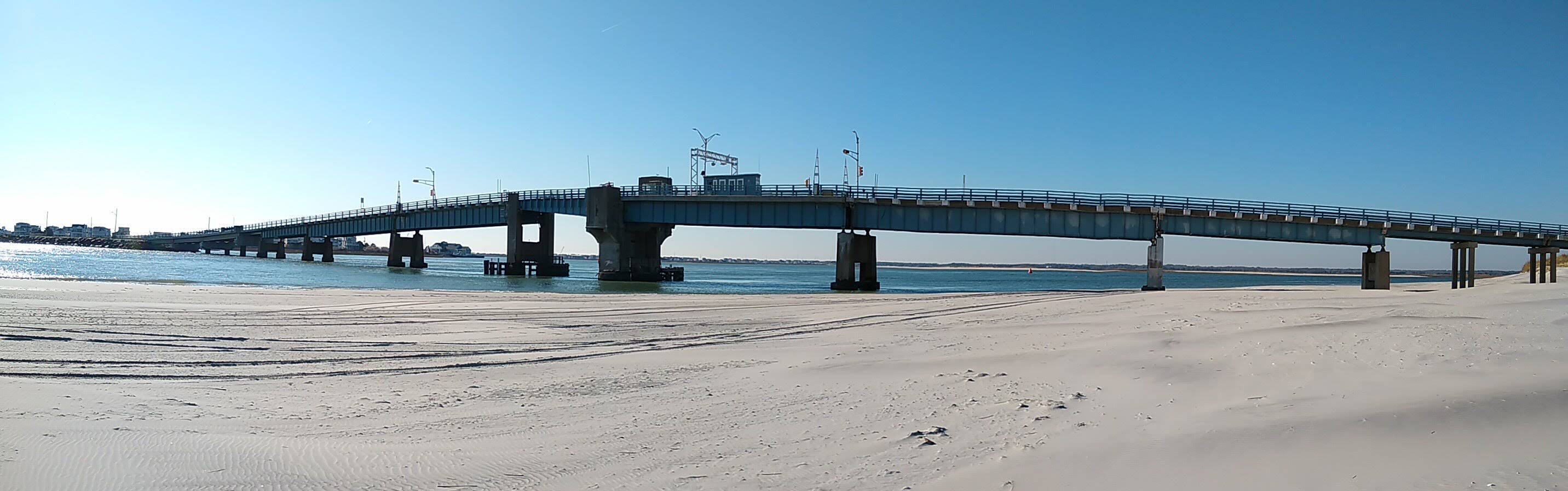
Townsend’s Inlet Bridge was built more than 85 years ago and is nearing the end of its service life. The bridge has been rehabilitated several times in the past 10-15 years; and most recently Spans 1 through 7 were replaced in July 2019. The most current Bridge Re-Evaluation Report indicates that the bridge is in overall poor condition, due to the poor condition of its superstructure and substructure and low inventory ratings.
In order to replace the bridge or perform a major rehabilitation using federal or state funding, this study must first be completed to gain project input from public officials, stakeholders, and the general public. The Local Concept Development (LCD) process will develop a Purpose and Need Statement and establish project goals and objectives to help examine conceptual alternatives.
A Local Concept Development (LCD) Study is the first phase of the Local Project Delivery Process for transportation improvements. A transportation problem was identified (the Townsend’s Inlet Bridge is in poor condition), and this study is the first step towards future bridge improvements. Cape May County will oversee this phase of the project, which began in 2025 and is expected to be completed in 2027.
During this phase, a well-defined and well-justified Purpose and Need Statement will be developed focusing on the need to improve safety and maintain the current crossing over Townsend’s Inlet. The LCD Phase elements also include:
Local Preliminary Engineering (LPE) is the second phase of the Local Project Delivery Process for transportation improvements. It is also referred to as the Preliminary Engineering (PE) Phase. The purpose of PE is to further advance the Preferred Preliminary Alternative (PPA) that was determined in the LCD phase and to secure the Environmental Document.
The following is the anticipated schedule:
CURRENT PHASE – Local Concept Development (LCD)
March 2025 – February 2027
SUBSEQUENT PHASE – Local Preliminary Engineering (LPE)
Date TBD, approximately Summer 2027
SUBSEQUENT PHASE – Final Design (FD)
Date TBD
SUBSEQUENT PHASE – Construction
Date TBD
The Study findings to date have revealed the following:
Need additional input from team
Need additional input from team
As part of the Local Concept Development (LCD) phase, a Preliminary Preferred Alternative (PPA) will be determined. More information will be available after additional work has been completed.
The project’s goals and objectives are identified as follows:
Construction is anticipated to begin MONTH 20XX.
Need input
The project will be federally funded. A construction cost estimate will be developed as part of the PE phase.
Environmental resources will be considered during the evaluation of conceptual alternatives include air, noise, contaminated sites, parks, wetlands, water resources, and protected species and their habitats, as well as social, economic, and cultural resources such as historic structures and facilities. Environmental assessments conducted during the Local Concept Development phase found that minimal environmental resource impacts are anticipated.
The project is located over Townsend’s Inlet, and therefore potential impacts to water quality, navigation, flood zones, and aquatic and riparian habitats will be considered during design and construction. Socioeconomic impacts such as temporary traffic diversions will also be minimized through careful consideration and ongoing discussions with the community.
All potential project impacts will be evaluated, and avoidance/minimization or mitigation measures will be developed through the National Environmental Policy Act (NEPA) environmental review process.
The Project Team is very interested in knowing how the local community uses the bridge, any current traffic problems, and how the public sees alternative solutions. Community Outreach during the planning stages is a vital part of the LCD process, and we encourage the community to follow, participate, and help make sure every potential effective element has been considered and examined for its viability.
Attendance at public meetings is a good way to make your voice heard and ensure a successful project further down the road. If you are unable to attend a meeting, you can keep tabs on new project developments by visiting this website and reviewing the meeting minutes and materials. Naturally, coming to a meeting is the best way to stay involved and get your answers firsthand with the project team present. However, if you still have questions, we’ve made it easy for you to reach the project team directly by using the online contact form.
As part of the community outreach efforts, numerous meetings will be held to share project information and obtain input. Please be sure to:
Cape May County and the cooperating agencies of FHWA and NJDOT encourage community members to voice their concerns and contribute suggestions to the Project Team. To provide input, attend one of the public meetings or contact:
Robert Church, PE
Cape May County Principal Engineer
countyengineer@co.cape-may.nj.us
Cape May County Division of Engineering
4 Moore Road, DN 402
Cape May Court House, NJ 08210
609-465-1035